Familiar Faces, Empty Chairs: How Perth's Local Broadcast Scene Reached Its Breaking Point
A wave of departures from Perth radio and television in 2026 didn't happen overnight — here's the decade-long story behind the empty studios.
3 min read
A wave of departures from Perth radio and television in 2026 didn't happen overnight — here's the decade-long story behind the empty studios.
3 min read
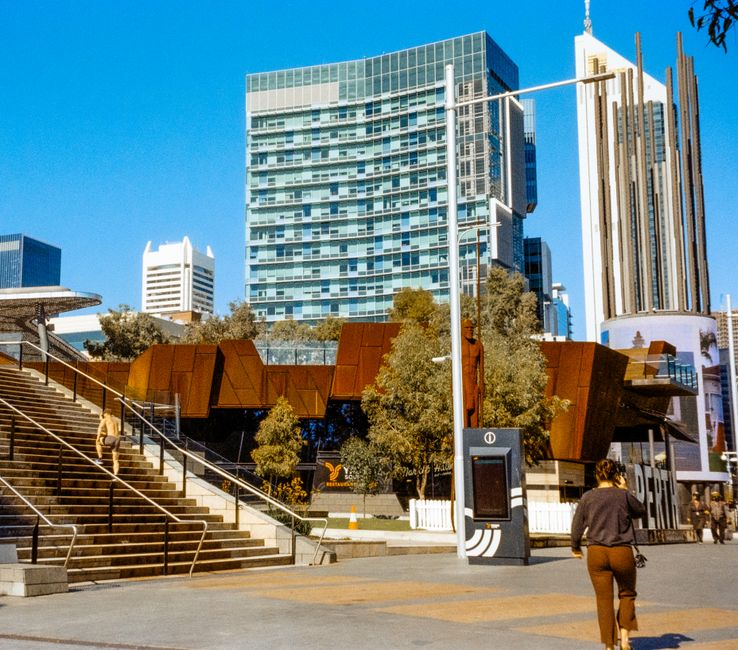
Perth's local broadcasting landscape has shed more familiar faces in the first half of 2026 than in any comparable period since the digital disruption of 2012-2014. Veteran presenters have walked out of studios on Dianella's Tuart Hill broadcast precinct and along Adelaide Terrace in the CBD, with some exits announced, others quiet, and a handful still disputed between talent and management. The turnover is real, it's accelerating, and it didn't come from nowhere.
The timing matters because Western Australia's media market is simultaneously booming in population and shrinking in advertising revenue. Perth's population crossed 2.4 million in early 2026, driven by AUKUS-related defence workforce migration, resources sector expansion, and sustained immigration intake. More ears, more eyeballs — yet the commercial revenue that once funded competitive local content has continued draining toward Meta and Google platforms, which now capture an estimated 72 cents of every digital advertising dollar spent in Australia, according to the ACCC's most recent Digital Advertising Services Inquiry update.
To understand 2026, you have to go back to 2018, when Nine Entertainment absorbed Fairfax Media and Seven West Media began shedding costs at its Osborne Park production facilities. Regional and state-level programming budgets were cut incrementally — rarely in dramatic single announcements, more often through attrition. When a presenter left, the slot was restructured. When a producer retired, the role was absorbed. Perth's Seven affiliate and Nine's 9News bureau both reduced locally produced hours between 2019 and 2024, with local content windows on some weeknight bulletins trimmed from 60 minutes to 45 minutes by mid-2023.
Commercial radio followed a similar arc. ARN and Southern Cross Austereo, which between them control the majority of Perth's FM licences, accelerated the shift to networked content — shows produced in Sydney or Brisbane and broadcast simultaneously across multiple markets. Local breakfast programmes remained a commercial priority, but drive and evening slots were progressively nationalised. By January 2026, at least three Perth FM timeslots that had been locally produced as recently as 2022 were running syndicated interstate content.
The ABC, headquartered locally at Tuart Hill, has been no shelter from the pressure. Federally mandated efficiency targets, which required the corporation to redirect $84 million in savings across 2024-2025, cut into staffing across radio and television divisions. Perth-specific programming on ABC Radio Perth — which broadcasts on 720 AM — absorbed its share of those cuts, losing production roles that had historically fed experienced journalists and presenters into the commercial sector as well.
Several factors converged in early 2026. Contracts negotiated during the post-COVID talent retention scramble of 2022-2023, when stations briefly competed for local voices, began expiring. Renewal offers came in materially lower — industry sources familiar with Perth market negotiations describe pay cuts of between 15 and 30 percent being tabled as standard. Some presenters accepted. Others did not.
The growth of podcast and streaming platforms has also changed the calculus for talent. A presenter with an established Perth audience can now reach that audience directly through platforms like Spotify or via independent subscription models, without splitting revenue with a broadcast licensee. The Karrinyup and Joondalup corridors, where Perth's fastest-growing listener demographics live, are disproportionately streaming-native audiences under 45.
There is a practical consequence for listeners and viewers beyond sentiment. Local knowledge — traffic incidents on the Kwinana Freeway, council votes in Stirling, community events in Fremantle — is harder to replace with a networked host reading a script in Brisbane. Regulators have noted the trend. The Australian Communications and Media Authority published guidance in March 2026 reminding licensees of local content obligations under the Broadcasting Services Act, though enforcement mechanisms remain limited.
Audiences who want locally grounded broadcasting should expect more consolidation before any reversal. The stations most likely to retain genuine Perth presence are those with breakfast programmes generating sufficient advertising to justify local production costs — a shrinking but still viable group. For everyone else, the adjustment will be ongoing, and the familiar voices of the past decade will increasingly be found somewhere other than the AM dial or the 6pm news desk.
Spread the word
About this article
Published by The Daily Perth
Stay in the loop
Daily brief
Free, in your inbox before 7am. Weekdays.
The Daily Network — local news across Australia
More local news across Australia