The Numbers Don't Lie: Perth Is Getting Hotter and the City Is Running Out of Time
New data reveals Perth is warming faster than almost any other Australian capital, with rainfall collapsing and infrastructure struggling to keep pace.
4 min read
New data reveals Perth is warming faster than almost any other Australian capital, with rainfall collapsing and infrastructure struggling to keep pace.
4 min read
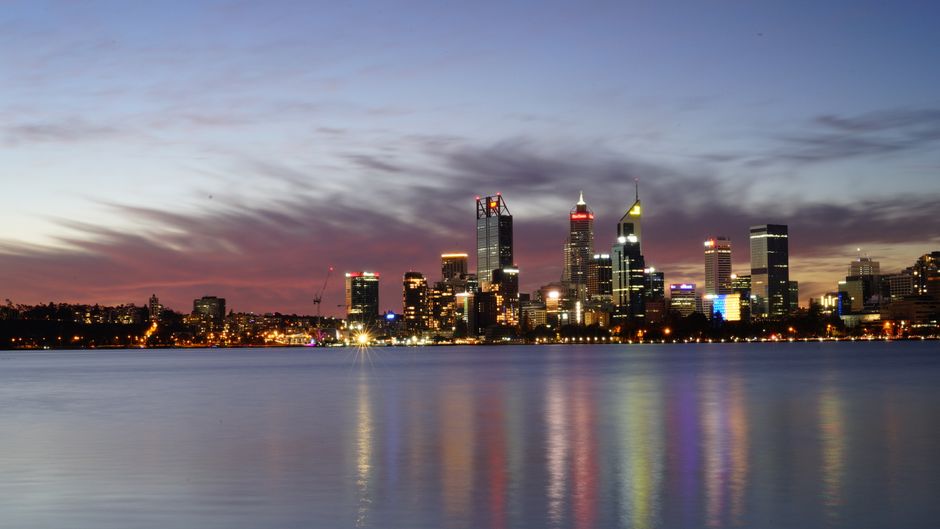
Perth recorded its 47th day above 35 degrees Celsius in the 2025–26 summer season — the most since Bureau of Meteorology records began at Swanbourne in 1897. That single figure sits at the centre of a widening crisis that city planners, water engineers and public health officials are scrambling to address before the next summer arrives in four months.
The timing matters because the Cook government handed down a $3.2 billion infrastructure budget in May that allocated $480 million specifically to climate-resilient infrastructure, yet community groups and independent researchers argue the spending is still mismatched against the scale of what the data is showing. Perth's mean annual temperature has risen by 1.8 degrees Celsius since 1950 — a faster warming rate than Sydney or Melbourne over the same period. Annual rainfall across the Swan Coastal Plain has dropped by roughly 20 per cent since the 1970s, with winter rainfall — the rain that historically filled reservoirs — down closer to 30 per cent.
Drive down Wanneroo Road through Joondalup on a July morning and it already feels like spring. The city's northern corridor, which absorbed more than 40,000 new residents between 2021 and 2025 according to the Australian Bureau of Statistics, is expanding across the Swan Coastal Plain's sandy soils at precisely the moment those soils are drying out. New subdivisions at Alkimos and Eglinton are being connected to Water Corporation's taps at a rate that is testing the agency's desalination capacity. The Binningup desalination plant south of Mandurah — the state's second — currently supplies about 50 gigalitres per year, while the original Kwinana plant adds another 45 gigalitres. Together they supply roughly 60 per cent of Perth's drinking water, a proportion that has doubled since 2012 precisely because rainfall into catchments like Mundaring Weir has been unreliable.
The heat itself is a parallel emergency. The Perth Children's Hospital in Nedlands treated 340 children for heat-related illness in the 2025–26 summer, up from 214 the previous year, according to WA Health data released in April. Western Power reported nine separate high-load events between December and March where grid demand exceeded 4,200 megawatts — three more than the previous record summer. Blackout risk windows are now modelled to occur on up to 28 days per year by 2035 under mid-range climate projections prepared by CSIRO for the Department of Planning, Lands and Heritage.
The City of Perth's urban heat island effect is measurable. Temperatures in the CBD around Hay Street Mall and Forrest Place consistently run 4 to 6 degrees warmer on still evenings than neighbouring Kings Park, according to monitoring data gathered by Curtin University's urban climate research group between 2022 and 2025. The city has a target of 20 per cent urban tree canopy cover by 2030 — it currently sits at 14 per cent. Greening Australia has flagged that reaching the target requires planting approximately 180,000 trees across the metropolitan area in four years, a task that needs sustained funding the current budget cycle does not fully cover. Advocates put the shortfall at roughly $90 million over five years.
The state government's Metronet expansion adds a layer of complexity. Elevated concrete rail infrastructure at Morley and Ellenbrook will generate additional radiant heat in those corridors unless shading and greening are designed in from the start — something the Public Transport Authority has committed to in principle but not yet funded in detail for all stations.
For households, the immediate practical reality is stark. Water Corporation is forecast to introduce Stage 4 garden watering restrictions — limiting outdoor watering to one day per week — if the Gnangara groundwater mound, which supplies roughly 40 per cent of scheme water north of the river, drops to a trigger level projected to be reached by late 2027. Residents in Stirling, Wanneroo and Joondalup council areas draw most heavily on that supply. Installing a rainwater tank now qualifies for a $500 state government rebate under the Waterwise Homes program; a 5,000-litre poly tank currently retails at around $800 to $1,200 installed. The arithmetic is straightforward. The climate data suggests the deadline for doing something about it is not far off.
Spread the word
About this article
Published by The Daily Perth
Stay in the loop
Daily brief
Free, in your inbox before 7am. Weekdays.
The Daily Network — local news across Australia
More local news across Australia