By the Numbers: Perth Is the Rooftop Solar Capital of the World
New data lays bare just how far ahead of every other city on earth Perth has run on residential solar — and the gap is still widening.
3 min read
New data lays bare just how far ahead of every other city on earth Perth has run on residential solar — and the gap is still widening.
3 min read
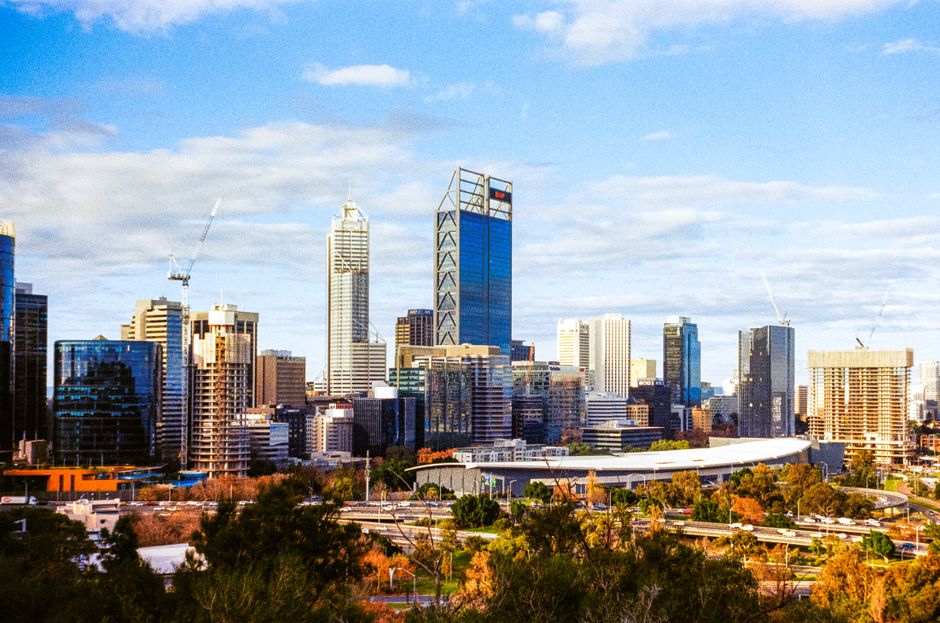
More than 47 percent of Perth homes now carry rooftop solar panels, a penetration rate that leaves every comparable city on the planet behind. The figure, drawn from the Australian Energy Market Operator's June 2026 Distributed Energy Resources report, puts the Western Australian capital ahead of Adelaide at roughly 43 percent and well clear of any city in Germany, California or China. On a per-capita basis, Perth residents have installed approximately 1.3 kilowatts of rooftop solar for every man, woman and child in the metropolitan area — a number that has doubled since 2018.
The timing matters. WA's state-owned retailer Synergy is grappling with a grid designed for one-way power flows, and the Cook Labor government handed down a May 2026 state budget that flagged $380 million for grid-stabilisation infrastructure over four years. Every new panel added to a Balga fibro cottage or a Alkimos display home pushes that engineering challenge further. The network's midday demand trough now routinely swings negative on clear winter weekends — meaning households are collectively generating more power than the entire metro area consumes, and the excess has to go somewhere.
Western Power's network data shows 420,000 individual rooftop systems connected across the Perth and South West grids as of 30 June 2026. The average system size has grown from 5.2 kilowatts in 2021 to 8.7 kilowatts today, driven partly by falling panel prices — a 10-kilowatt system that cost $14,500 installed in 2020 now retails for around $7,800 through suppliers including Synergy's own authorised contractor program. Battery uptake is accelerating alongside panels: 68,000 home battery systems are now registered on the network, up 31 percent on the previous financial year.
The suburb of Ellenbrook, 26 kilometres northeast of the CBD along the soon-to-complete Metronet Ellenbrook Line corridor, has emerged as a statistical outlier even within Perth. Local government data from the City of Swan shows solar penetration in Ellenbrook's residential streets sitting above 61 percent — one of the highest rates recorded for any suburb in any country. Further south, the established suburb of Willetton in the City of Canning tracks at 58 percent. Both are middle-ring owner-occupier suburbs where household incomes and roof space converge with high electricity bills, the combination that solar installers have always chased.
Synergy's feed-in tariff, currently set at 2.25 cents per kilowatt-hour under the Distributed Energy Buyback Scheme, is widely regarded as inadequate given wholesale prices that regularly spike above 30 cents during evening peaks. The Distributed Energy Buyback Scheme rate was last reviewed in November 2025, when the Economic Regulation Authority declined to raise it, citing grid-management costs. That decision has pushed more households toward self-consumption strategies — larger batteries, smart hot-water timers, electric vehicle charging scheduled for noon — rather than exporting surplus power.
Western Power is rolling out its IntelliGrid program across 15 Perth substations this calendar year, with Cannington, Mandurah and Joondalup substations confirmed for upgrades by December 2026. The upgrades are designed to handle bidirectional flows and allow the network to dispatch household batteries as a collective resource during evening demand peaks — a model sometimes called a virtual power plant. The Australian Renewable Energy Agency committed $28 million to the project in March 2026.
For homeowners still weighing an installation, the federal government's Cheaper Home Batteries Program, launched in January 2026, provides a $372 per kilowatt-hour subsidy on eligible systems. A standard 10-kilowatt-hour battery that previously cost $9,500 installed now comes in closer to $5,700 after the rebate, according to the Clean Energy Council's current price guide. The program is capped at 110,000 units nationally, and WA applicants have already claimed more than 22,000 allocations — roughly 20 percent of the national pool from a state with about 10 percent of the country's population. Perth didn't end up atop the global solar table by accident, and it shows no sign of slowing down.
Spread the word
About this article
Published by The Daily Perth
Stay in the loop
Daily brief
Free, in your inbox before 7am. Weekdays.
The Daily Network — local news across Australia
More local news across Australia