Wellington Retail Vacancy Rate 2024: What Businesses Face Now
Wellington's retail vacancy hits 4-year high while hospitality grows. Learn how rising costs and tight labour markets are reshaping the capital's business landscape mid-2024.
4 min read
Wellington's retail vacancy hits 4-year high while hospitality grows. Learn how rising costs and tight labour markets are reshaping the capital's business landscape mid-2024.
4 min read
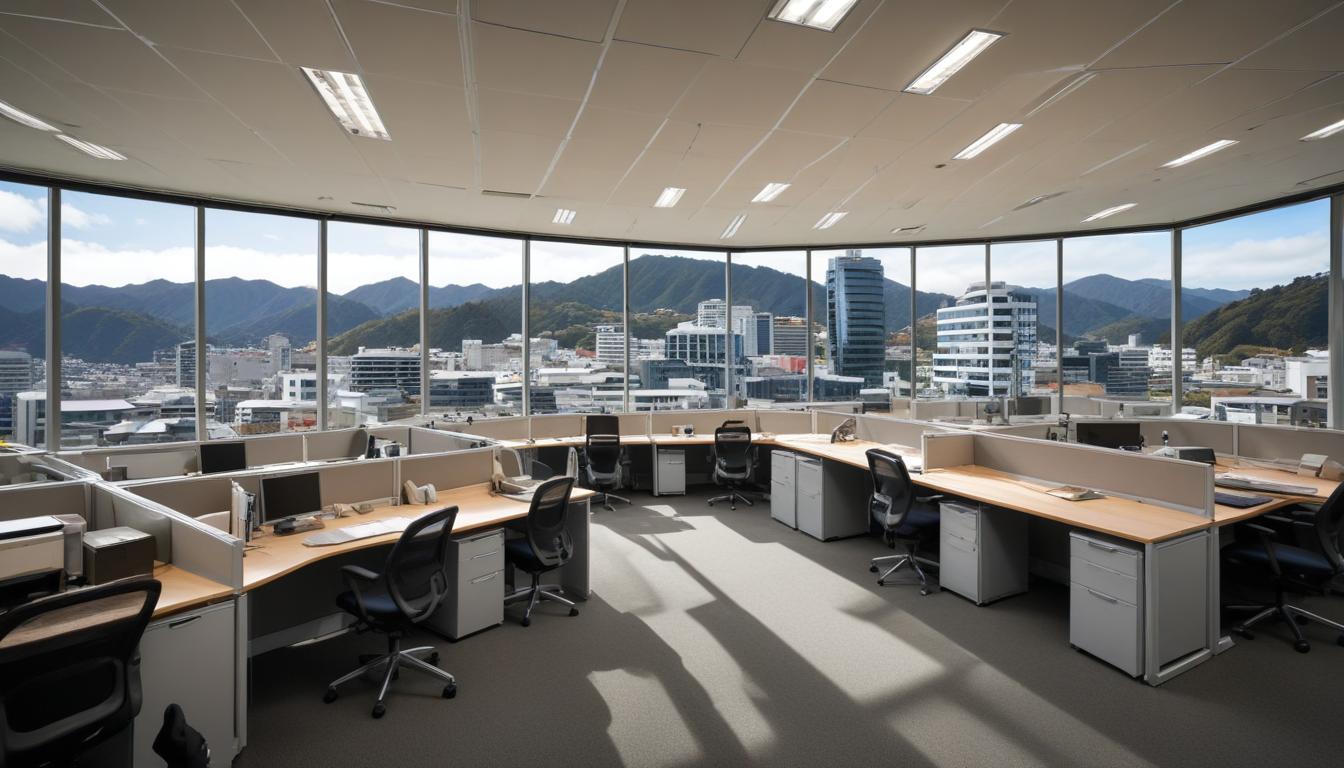
Wellington's retail vacancy rate along Lambton Quay hit its highest level in four years this past quarter, even as hospitality openings in Te Aro accelerated — a split that tells you almost everything about where money is moving and where it is not in the capital's economy right now.
The divergence matters because it signals the end of the post-pandemic rebound period that carried many businesses through 2023 and into 2024. Wellington operators who banked on that recovery momentum are now facing a harder set of conditions: discretionary spending under pressure from mortgage repayments and rents, a labour market that remains tight at the skilled end despite broader economic softness, and a local government infrastructure programme that is simultaneously disrupting foot traffic and, eventually, promising to generate it.
Cuba Street and the surrounding Te Aro precinct continue to draw new hospitality investment. At least six new food and beverage premises opened between February and June 2026 in the stretch between Ghuznee Street and Vivian Street, ranging from a Korean barbecue specialist to a natural wine bar occupying a former print shop on Garrett Street. Landlords in that corridor are reported to be asking between $350 and $450 per square metre annually for ground-floor tenancies — still below the peak rates of 2019, which gives incoming operators a window that may not stay open long.
The picture on Lambton Quay is more complicated. Several national retailers have consolidated or exited their Wellington flagship stores since January, drawn back to reduce their physical footprints. The Wellington City Council's ongoing Let's Get Wellington Moving transport works — which have narrowed footpaths and reduced parking near the Golden Mile — are consistently cited by business associations including the Wellington Chamber of Commerce as a factor suppressing walk-in trade. The Chamber has publicly called for the council to accelerate mitigation measures for affected businesses, though the specific remedies remain under negotiation as of July 2026.
Meanwhile, the waterfront precinct around Frank Kitts Park and Waitangi Park is seeing renewed leasing interest, partly driven by the redevelopment activity at Shed 6 and the ongoing activation of Queens Wharf. Office tenancies in the Featherston Street and Waring Taylor Street corridors are trading at a notable discount to pre-2020 levels, with average net face rents for B-grade space sitting closer to $280 per square metre — a figure that is attracting tech firms and creative agencies priced out of their previous spaces.
The Reserve Bank of New Zealand left the Official Cash Rate at 3.25 percent at its May 2026 review, a level that continues to squeeze both consumer borrowing capacity and business credit lines. For Wellington's significant proportion of small and medium enterprises — the city's business register is dominated by firms employing fewer than 20 people — that rate environment means working capital is expensive and margins are thin.
Food costs remain elevated. Hospitality operators across the capital have seen wholesale ingredient prices run roughly 8 to 12 percent above 2023 levels for staple categories, driven partly by global supply chain factors and partly by a New Zealand dollar that has softened against key import currencies. Several Te Aro operators have responded by shortening menus, shifting to fixed-price formats, or adding a weekday lunch service to distribute fixed overhead across more revenue occasions.
The practical advice from advisers working with Wellington businesses right now comes down to three priorities. First, lock in lease renewals early if your current terms are favourable — landlord appetite for incentives is present but unlikely to last beyond early 2027 if vacancy begins to tighten. Second, invest in digital ordering and loyalty infrastructure now; Wellington consumers are increasingly self-sorting toward businesses that make repeat purchasing frictionless. Third, watch the council's Long-Term Plan capital schedule carefully — the sequence of infrastructure works through Thorndon and the CBD will create predictable disruption windows that smart operators can plan around rather than simply absorb.
The next significant data point for the capital's economy arrives in late August, when Statistics New Zealand publishes its regional GDP estimates for the year to March 2026. That release will tell businesses whether Wellington's services-heavy economy held ground against a sluggish national picture — or whether the mid-year caution is well founded.
Spread the word
About this article
Published by The Daily Wellington
Stay in the loop
Daily brief
Free, in your inbox before 7am. Weekdays.